
































In a significant political development in Rajasthan, the Congress party has delivered a strong performance in the Panchayat Samiti and Zila Parishad elections, securing a commanding lead over the Bharatiya Janata Party (BJP). The results have sparked fresh political debates and are being viewed as an important indicator of rural voter sentiment in the state.
The outcome marks one of the most substantial victories for Congress in recent local body elections. Political observers believe the results could influence the state’s political narrative in the coming years, particularly as parties begin preparing for future electoral contests. While local elections often revolve around regional issues, they frequently offer clues about public perceptions of ruling governments and opposition parties.
Congress Achieves Impressive Seat Tally
Congress emerged as the clear frontrunner in the Panchayat Samiti elections by winning 3,701 seats, significantly ahead of BJP, which secured 2,181 seats. The gap between the two parties highlights Congress’s strong performance across large parts of rural Rajasthan.
The party also performed impressively in the Zila Parishad elections, winning 599 seats compared to BJP’s 301 seats. The result underlines Congress’s success in strengthening its grassroots presence across the state.
The victory is particularly noteworthy because local body elections are often considered a test of organizational strength. A strong showing in these elections suggests that Congress workers and local leadership were successful in connecting with voters at the village and district levels.
Congress Leaders Celebrate Rural Mandate
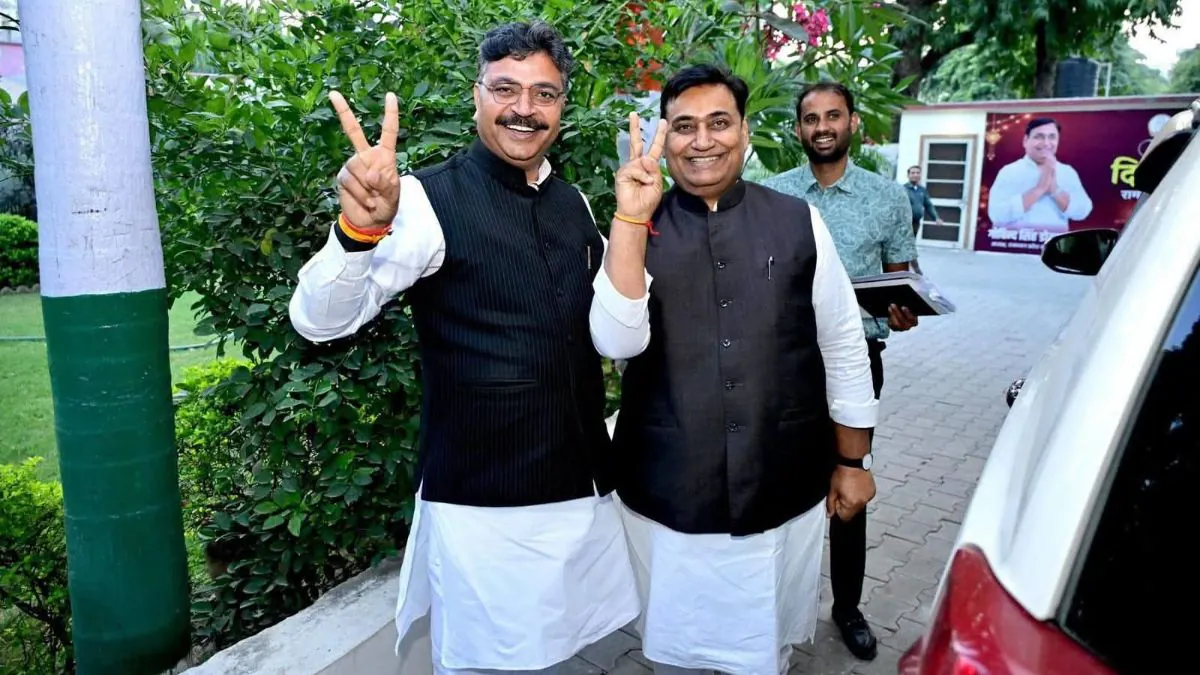
Following the results, Rajasthan Congress chief Govind Singh Dotasara hailed the outcome as a victory for the people of Rajasthan and described the result as a glimpse of what could potentially happen in future elections.
Party leaders and workers celebrated across multiple districts, viewing the victory as evidence that rural voters are increasingly supporting Congress candidates in local governance institutions. The enthusiasm within party ranks was visible as celebrations spread throughout various regions of the state.
Political analysts suggest that strong grassroots support is often crucial for building momentum ahead of larger electoral contests. The latest performance is likely to boost Congress morale and strengthen its position across Rajasthan’s political landscape.
BJP Faces Setback in Several Strongholds
One of the most striking aspects of the election was BJP’s performance in several politically significant districts and constituencies. The ruling party faced challenges in areas that have traditionally been regarded as influential political regions. [theweek.in]
A particularly notable result came from Bharatpur, the home district of Rajasthan Chief Minister Bhajan Lal Sharma. In Bharatpur, Independent candidates secured 76 Panchayat Samiti seats, Congress won 46 seats, while BJP managed only 32 seats.
The result has generated considerable political discussion because outcomes in such high-profile districts are often closely watched by both supporters and opponents.
Strong Congress Performance in Jaipur and Jodhpur
Congress also delivered dominant performances in some of Rajasthan’s most politically important districts. In Jaipur, the party won 216 Panchayat Samiti seats, compared to BJP’s 87 seats.
Similarly, in Jodhpur, Congress secured 195 seats while BJP won 81 seats. The scale of the victories in these districts has strengthened the party’s claim that voter support remains strong in both urban-influenced and rural regions.
Beyond Jaipur and Jodhpur, Congress recorded victories in districts including Bhilwara, Bikaner, Dausa and Sikar, further expanding its electoral footprint across the state.
Regional Parties and Independents Play a Significant Role
While the Congress-BJP contest dominated political attention, regional parties and Independent candidates also emerged as important players in the elections. Their performance demonstrated that Rajasthan’s political landscape continues to feature diverse local influences.
The Rashtriya Loktantrik Party (RLP) secured 496 Panchayat Samiti seats, making it one of the strongest regional performers. The Bharat Adivasi Party (BAP) won 276 seats, while the Bahujan Samaj Party (BSP) and CPI(M) also registered victories. Independent candidates collectively secured 627 Panchayat Samiti seats, highlighting the continued influence of local leadership and community-based politics.
In the Zila Parishad elections, RLP again emerged as the strongest among non-Congress and non-BJP parties by winning 37 seats, followed by BAP with 22 seats.
BJP Retains Pockets of Strength
Despite the overall setback, BJP recorded victories in several districts and remained competitive in a number of regions. The party performed well in areas such as Ajmer and also secured notable results in Balotra, Salumber and Udaipur.
In the Zila Parishad contests, BJP achieved stronger results in districts including Ajmer, Beawar, Dungarpur, Jhalawar, Pali and Udaipur. These performances indicate that while the party faced challenges statewide, it continues to maintain a support base in several important districts.
Political experts suggest that such mixed results underline the complex nature of Rajasthan politics, where local factors often influence voting patterns alongside broader political narratives.
Why These Results Matter
The Rajasthan Panchayat elections are more than just a local governance exercise. They serve as a barometer of public sentiment at the grassroots level and provide political parties with valuable insights into voter priorities.
Congress’s strong performance is likely to energize its cadre and provide momentum for future political campaigns. For BJP, the results may trigger internal reviews and strategic planning aimed at strengthening its position in rural areas.
The elections covered 7,543 Panchayat Samiti seats and 1,275 Zila Parishad seats across 37 districts, making them one of the largest local democratic exercises in the state.
As Rajasthan’s political landscape continues to evolve, these results will undoubtedly influence discussions about governance, rural development, leadership, and electoral strategy in the years ahead.
The Congress victory has reinforced the party’s presence at the grassroots level, while the BJP faces the challenge of rebuilding momentum in several key regions. With future elections always on the horizon, the battle for Rajasthan’s political future is far from over.