
































NEW DELHI — Long before the first flames breached the upper floors, it was the thick, toxic black smoke that sealed the fate of the victims inside the ill-fated Delhi hotel. When the final tally was recorded, 21 people had lost their lives in one of the national capital’s deadliest modern tragedies. However, for the first responders and firefighters who rushed into the labyrinth of the burning building, the disaster was not just a battle against fire—it was a harrowing, agonizing race against smoke and time.
The rescue operation, which unfolded over four grueling hours in the dead of night, exposed the terrifying realities of urban firefighting in densely packed neighborhoods, where every passing second meant the difference between life and death.
The Midnight Alarm and the Urban Obstacle Course
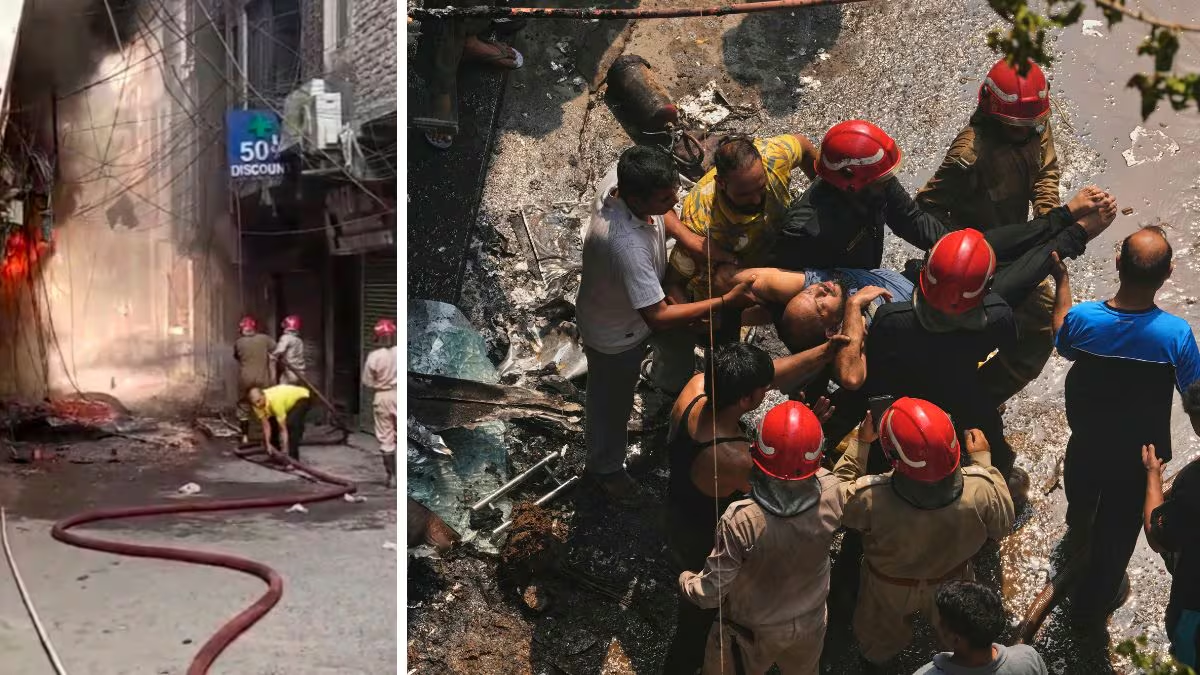
The first distress call rang out at the Delhi Fire Services (DFS) control room just past midnight. Panicked callers reported a massive blaze originating from the ground-floor eatery of a multi-story building that also housed a tightly packed hotel. Within minutes, multiple fire tenders were dispatched. But reaching the epicenter of the disaster proved to be the first of many monumental challenges.
As the heavy fire engines navigated the labyrinthine streets of the locality, they were met with the notorious hurdles of Delhi’s unplanned urbanization. Haphazardly parked cars, low-hanging webs of tangled electricity cables, and narrow alleys severely restricted the movement of the rescue convoys. Firefighters were forced to halt their vehicles hundreds of meters away from the actual site.
To bridge the gap, responders had to manually drag heavy, water-filled hoses through the winding lanes. In an emergency where the “golden minutes” dictate survival rates, these logistical bottlenecks cost the rescue teams invaluable time. By the time the first drops of water hit the blazing facade, the building had already transformed into a deadly gas chamber.
The Chimney Effect: A Wall of Toxic Black Smoke
When firefighters finally breached the perimeter, they were met with a terrifying sight. The flames were largely contained to the ground floor and the immediate mezzanine level, fueled by commercial cooking oils, plastic furniture, and highly combustible materials. However, the architectural layout of the building acted as a perfect chimney.
The stairwell, which served as the only entry and exit point for the entire structure, acted as a funnel. Superheated air and dense, toxic smoke bellowed upward, filling the narrow corridors and the windowless rooms on the upper floors.
“We couldn’t see our own hands in front of our faces,” recounted a senior fire officer who led the initial entry team. “The heat was intense, but the smoke was absolute. It was thick, acrid, and choking. We knew instantly that we weren’t just fighting flames; we were racing to pull people out of a suffocating trap.”
Equipped with Self-Contained Breathing Apparatus (SCBA) sets, teams of firefighters plunged into the darkness. Their primary objective shifted instantly from merely dousing the fire to executing a high-risk search and rescue mission in zero-visibility conditions.
The Breach: Smashing Glass to Save Lives
Realizing that the internal stairwell was completely compromised and acting as a conduit for lethal fumes, the rescue teams had to improvise entry points. Hydraulic platforms and tall ladders were deployed against the exterior of the building.
Rescue workers used axes and heavy tools to smash the sealed glass windows of the upper floors, desperately trying to create ventilation and let the trapped heat and smoke escape. The sound of shattering glass echoed through the night, followed by the harrowing cries of those trapped inside.
Navigating the interior was a nightmare. The hotel had been illegally partitioned using cheap plywood and fiberglass to maximize the number of rooms, turning the floor plan into a confusing maze. Firefighters had to kick down locked doors, crawling on their hands and knees to stay below the thickest layers of smoke, feeling around for unconscious victims in the pitch black.
“We found people collapsed right next to their beds, or just a few feet from their doors,” a visibly shaken rescue worker noted. “They tried to escape, but the smoke was so toxic that it incapacitated them within seconds. Two breaths of that air, and you lose consciousness.”
The Silent Killer: Asphyxiation
As victims were carried out over the shoulders of firefighters or lowered down via hydraulic lifts, waiting medical teams sprang into action. Ambulances lined the main arterial road, their flashing lights illuminating a scene of sheer chaos and grief. Paramedics performed frantic CPR on the pavements, trying to revive victims who had been pulled from the upper stories.
Tragically, medical reports later confirmed the firefighters’ worst fears: almost all 21 victims did not succumb to burn injuries. The cause of death was asphyxiation. The combustion of synthetic carpets, foam mattresses, and PVC paneling released a lethal cocktail of carbon monoxide and hydrogen cyanide. The victims were silently suffocated in their sleep or as they desperately groped in the dark for a way out.
The Toll on the Rescuers and the Somber Dawn
By 4:30 AM, the flames were entirely doused, and the cooling operations began. But the emotional and physical toll on the rescue teams was immense. Several firefighters had to be treated for smoke inhalation, dehydration, and minor burns, having pushed their equipment and their bodies to the absolute limit.
As the sun rose over the national capital, it illuminated a charred, hollowed-out shell of a building. The desperate race against time was over, leaving behind a profound sense of sorrow and a series of burning questions regarding fire safety compliance, illegal commercial operations, and administrative oversight.
The heroic efforts of the Delhi Fire Services saved dozens of lives that night, but the loss of 21 souls serves as a grim reminder of the deadly consequences when urban safety regulations are ignored. For the rescuers who braved the inferno, the memory of the impenetrable black smoke and the frantic search in the dark will remain etched in their minds forever.